
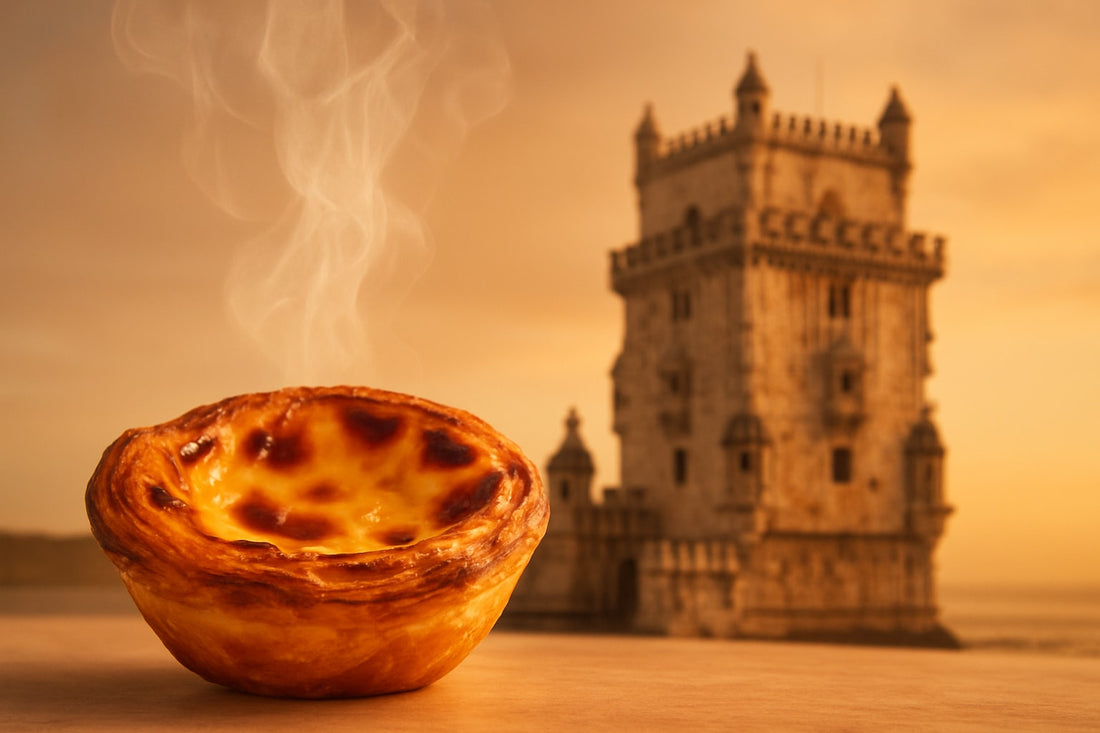
Imagine walking through the streets of Belém and the aroma of warm, crispy pastries filling the air. You immediately sense something special is happening here.
In this guide, we delve into the mystery of the pastel de nata Belém. What makes this famous Lisbon pastry so unique and irresistible?
We'll take you from the centuries-old monastery where it all began, to the secret recipe known only to a handful of people. You'll discover where you can taste the very best in 2025, get handy insider tips for your visit, and even learn how to make it at home.
Getting hungry yet? Read on to discover the secret behind this Portuguese classic!
The Origin of the Pastel de Nata in Belém
The history of the pastel de nata Belém begins deep in the heart of Lisbon, where the aroma of warm custard and crispy pastry has wafted through the streets of Belém for centuries. But how did these iconic pastries actually come to be? Let's take a journey back in time, where monks, traditions, and a touch of chance collide.

The origins in the Jeronimos Monastery
In the 18th century, when Portugal was still full of monasteries, it was the monks of the Jerónimos Monastery who first invented pastel de nata Belém. They used egg whites to starch clothes, leaving them with a surplus of egg yolks. So what do you do? Exactly, you start experimenting in the kitchen.
The economic crisis and secularization in Portugal didn't make things any easier. Monasteries had less income, so the monks looked for ways to earn money. Around 1837, they decided to sell their secret recipe to the Fábrica dos Pastéis de Belém, which still makes the original pastel de nata Belém to this day.
What makes this pastel de nata belém so unique? The secret family recipe is still closely guarded. Only a handful of people know all the details. This lends a certain mystique to the pastry. By comparison, other Portuguese pastries like Queijadas or Travesseiros are also beloved, but lack the caramel and custard toppings of the pastel de nata belém.
| Pastry | Signature ingredient | Texture |
|---|---|---|
| Pastel de Nata Belém | Egg yolks, puff pastry | Crispy, creamy |
| Queijada | Cottage cheese, cinnamon | Soft, crumbly |
| Travesseiro | Almond paste | Airy, crispy |
Fun fact: More than 20,000 pieces are sold annually at the Fábrica dos Pastéis de Belém! Want to delve even deeper into the origins and secrets of this delicacy? Be sure to check out "What is a Pastel de Nata?" for more background information.
The cultural significance in Portugal
The pastel de nata belém is more than just a sweet snack; it's a symbol of Portuguese pride. You'll find them in almost every café and pastelaria. The Portuguese love to take a short break with an espresso and one of these pastries, a tradition that brightens the day just a little bit.
A UNESCO application is even underway to have the pastel de nata Belém recognized as intangible cultural heritage. During holidays like Easter and Christmas, they are a staple on Portuguese tables. Pastéis de nata are shared on every occasion, whether it's a family gathering or a simple Sunday morning.
Many famous Portuguese, from fado singer Amália Rodrigues to soccer star Cristiano Ronaldo, have expressed their love for the pastel de nata belém. The pastry connects generations and demonstrates how a simple recipe can become a national icon.
In Portugal, it's even a sport to try and find the best pastel de nata Belém. Most people can immediately tell the difference between the Belém version and the one from the supermarket. It's no wonder this pastry holds such a special place in the heart of the country.
The Secret Recipe: What Makes Pastel de Nata Belém Unique?
Few sweet secrets are as shrouded in mystery as the recipe for pastel de nata Belém. Everyone knows that longing feeling when the aroma wafts from a bakery, but what makes this delicacy truly unique? Let's lift the veil of mystery together.
Ingredients and preparation method
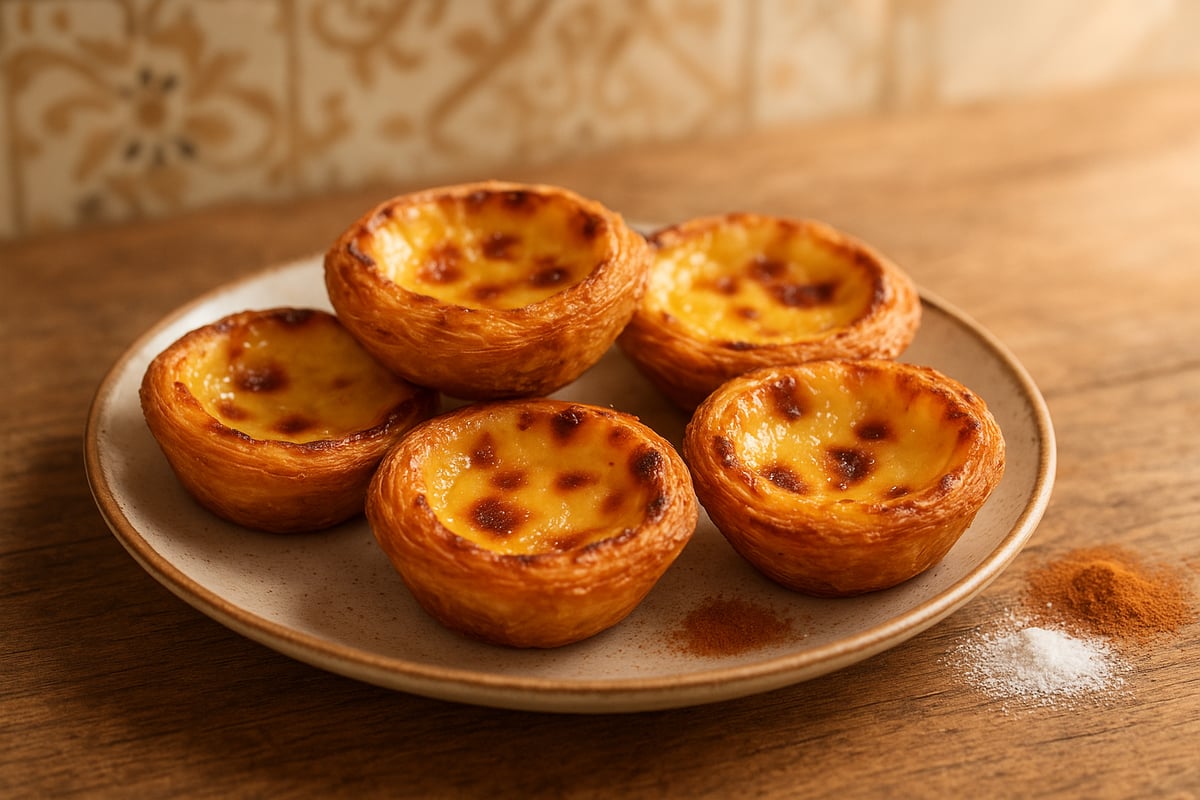
The secret of pastel de nata belém starts with the basics: the ingredients. Only the finest egg yolks, sugar, whole milk, lemon zest, and a pinch of cinnamon are good enough. But it's not just about what goes into it; the how is also crucial.
The puff pastry is rolled out by hand into a thin, almost translucent sheet. It's then tightly rolled up and cut into small portions. This creates that crispy, layered crust you won't find anywhere else.
The custard filling for pastel de nata Belém is velvety smooth and glossy. The trick is to get the mixture just right, so it doesn't curdle, but also doesn't remain too runny. Baking is done in a blazing hot oven, often well over 300°C (592°F). This causes the top to caramelize slightly, creating those characteristic brown spots.
What makes this variation truly special is its strict family secret. Only six people in the world know the complete recipe for pastel de nata belém. A maximum of three pastry chefs are allowed to know the recipe at any one time, and they sign a confidentiality agreement. Even within the bakery, the process is carried out in separate steps, so no one knows the full secret.
There are all sorts of myths floating around. Some people think it contains secret herbs, others believe the water from Belém makes the difference. But the real difference lies in tradition, craftsmanship, and the love with which each pastry is made. Want to discover even more fascinating facts about the secret and tradition? Then be sure to read the ultimate guide for Pastel de Nata lovers .
When comparing pastel de nata Belém to other Portuguese custard tarts, this one remains unsurpassed. Over 20,000 are sold annually at the original bakery, and that speaks volumes.
Taste, texture and presentation
What do you taste when you bite into a fresh pastel de nata belém? First, that crisp crust, super light and buttery. Then comes the filling: creamy, soft, with subtle notes of lemon and cinnamon. The lightly caramelized top adds that extra bit of bite.
Freshness is everything with pastel de nata Belém. They're best enjoyed straight from the oven, while the custard is still warm and the crust is crispiest. In Belém, it's traditional to sprinkle your tart with a little cinnamon and powdered sugar. This completes the taste experience.
Let's look at a comparison:
| Feature | Pastel de Nata Belém | Other Pastéis de Nata |
|---|---|---|
| Crust | Ultra crispy, layered | Less layered, softer |
| Filling | Velvety soft, creamy | Sometimes firmer |
| Top | Lightly caramelized | Often lighter |
| Serving temperature | Warm, just out of the oven | Often at room temp. |
| Secret ingredients | Yes | No |
A recent consumer test showed that 9 out of 10 Portuguese can tell the difference between pastel de nata belém and other varieties without looking at them. This isn't surprising, as the balance of sweetness, creaminess, and crunch is unparalleled.
Appearances are important too: the presentation is simple yet stylish. A small cake, golden brown, sometimes still steaming. Many people pair it with a strong espresso, which further enhances the flavors.
So, the next time you taste pastel de nata Belém, you'll know you're not just eating a pastry, but a piece of Portuguese heritage. That makes every bite extra special.
The Ultimate Pastel de Nata Experience in Belém (2025)
Imagine stepping off the tram in Belém and being greeted by the aroma of warm, sweet custard and crispy pastry. This is the heart of the pastel de nata Belém experience. In 2025, this delicacy will be even more popular than ever, and a visit to this iconic spot is a must for any foodie or Portugal lover.
Whether you're a first-timer or a seasoned fan, this guide will help you get the most out of your pastel de nata Belém adventure.
Practical guide: How to visit Pastéis de Belém
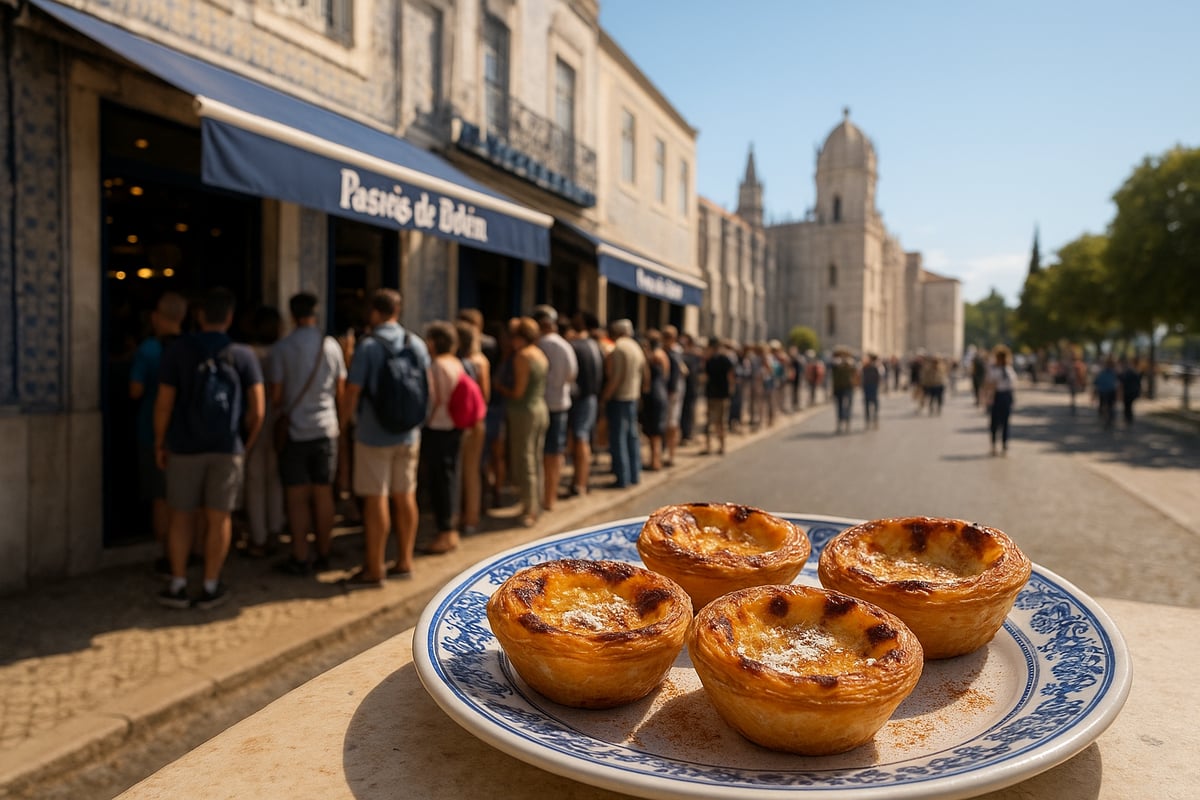
The Pastéis de Belém bakery is located on Rua de Belém, right next to the impressive Jerónimos Monastery. By 2025, this place will attract thousands of visitors daily, all eager to sample the original Pastéis de Nata Belém. Opening hours are generous: usually from 8:00 AM to 8:00 PM, but during peak season they may extend to 10:00 PM.
The lines can be impressive, especially on weekends and during school holidays. Want to score your pastel de nata Belém quickly? Go early in the morning or just before closing time. Sitting inside is recommended: you'll not only savor the pastries but also enjoy the authentic atmosphere with the blue and white tiles and the buzz of enthusiastic visitors.
Below is a handy overview for your visit:
| Time | Waiting time (average) | Realm |
|---|---|---|
| 8:00 – 10:00 | 5-10 min | Quiet, local residents |
| 10:00 – 14:00 | 20-40 min | Busy, many tourists |
| 2:00 PM – 5:00 PM | 10-20 min | Pleasant, mixed audience |
| 5:00 PM – close | 5-10 min | Friendly, families |
The price for a pastel de nata Belém in 2025 is around €1.60 each. They're often sold in packs of six in a pretty blue box – perfect as a souvenir. There are also workshops and guided tours, but these usually require advance booking, especially during peak season.
Want to try something different? In Belém, you'll find alternative bakeries like Pastelaria Aloma or Manteigaria, each with their own twist on the pastel de nata Belém. But the magic of the original remains unique: more than 20,000 bakeries are sold daily during peak season.
Must-see sights nearby
A visit to Pastel de Nata Belém isn't complete without exploring the surrounding cultural gems. Just a stone's throw away, the Jerónimos Monastery, a UNESCO World Heritage Site and a masterpiece of Portuguese late Gothic architecture, shines. Here, you can immerse yourself in Portuguese history and enjoy the beautiful cloister.
As you continue towards the Tagus River, you'll pass the iconic Torre de Belém, the robust Padrão dos Descobrimentos, and the modern MAAT Museum. Each of these sites tells a unique story of exploration, art, and innovation.
Looking to escape the hustle and bustle? Stroll through the Belém Botanical Garden, an oasis of tranquility. Combine culture and gastronomy with a day trip: start with a pastel de nata Belém breakfast, visit the monastery, stroll along the waterfront, and finish with coffee on a sunny terrace.
Here are the absolute must-sees in a row:
- Jeronimos Monastery: Gothic and impressive
- Torre de Belém: View over the Tagus
- MAAT museum: Modern art and architecture
- Botanical garden: Peace and greenery
- Walking trail to the river: Perfect for photos
This way you can make your pastel de nata belém trip a complete experience.
Insider tips for your visit in 2025
Want to get the most out of your pastel de nata Belém experience? These tips will make your visit unforgettable. It's best to go early in the morning or after 5:00 PM, when the lines are shorter and you can often taste the pastel de nata Belém still warm from the oven. Order at the counter inside, where you can sit quietly and enjoy the interior.
Taking photos of your pastel de nata Belém? The most beautiful light is by the window or on the terrace, with the Jerónimos Monastery in the background. Standard pastel de nata Belém is suitable for vegetarians, but vegans can find it at some of the neighborhood's alternative bakeries. Feel free to ask about the ingredients; the staff here are welcoming and helpful.
A typical Portuguese custom is to pair your pastel de nata Belém with a bica, a strong espresso. This way, you can truly experience the local atmosphere. If you'd like to learn more about the background, history, and secrets of this delicacy, you'll find everything clearly explained at Alles over Pastel de Nata .
Finally, always take an extra box with you to take home, because no one can resist the temptation of a fresh pastel de nata belém.
Pastel de Nata Worldwide: Variations & Innovations
The journey of pastel de nata belém is no longer limited to Portugal. Wherever you go, from chic Paris to bustling Macau, this delicious pastry pops up everywhere. But did you know that pastel de nata belém is sold in over 50 countries? Time to discover how this Portuguese classic is conquering hearts (and taste buds) worldwide.

International distribution of the pastry
Pastel de nata belém has become a global favorite. In Brazil, you'll find the pastry on almost every street corner, often with a tropical twist like coconut or even guava. In Macau, a former Portuguese colony, you'll find pastel de nata belém in every coffee shop, sometimes with an Asian twist like matcha or black sesame.
Its popularity is also growing in France, the United Kingdom, and the Netherlands. There are bakeries specializing entirely in pastel de nata Belém, with their own interpretations. Some use local ingredients, such as Northern European butter or French vanilla.
Fun fact: you can now find official pastel de nata Belém in over 50 countries. That speaks volumes about this pastry's universal appeal.
Here's a handy overview of popular variations from around the world:
| Country | Local variant | Unique ingredient |
|---|---|---|
| Brazil | Pastel de nata com coco | Coconut |
| Macau | Portuguese egg tart | Matcha, sesam |
| France | Pastel de nata à la crème | French cream |
| The Netherlands | Classic variant | Local butter |
Large international bakery chains also offer pastel de nata Belém on their menus. If you'd like to learn more about this pastry's origins and world travels, be sure to check out the History of Pastel de Nata .
New flavors and trends in 2025
In 2025, innovation will be key, even for pastel de nata belém. How about a vegan or gluten-free version? More and more bakeries are catering to dietary needs without sacrificing the character of pastel de nata belém.
In addition, you see special flavors emerge:
- Chocolate infusions for the chocoholics
- Pastéis with passion fruit or raspberry for a fresh twist
- Alcoholic variants with port or amaretto
Food festivals dedicate entire days to pastel de nata Belém, where you can sample the most creative versions. And on social media? The hashtag #pasteldenata is trending with millions of posts, especially among young foodies showing off their finest pastries.
What's striking: although pastel de nata Belém is being reinvented worldwide, the classic Belém version remains the most popular. Yet, it's fun to see how every culture puts its own spin on this Portuguese icon.
Get inspired, try a new flavor, and who knows, you might find your favorite pastel de nata belém… maybe even outside of Portugal!
How to Make Pastel de Nata Yourself: Step-by-Step Home Recipe
Dreaming of whipping up the iconic pastel de nata Belém from your own oven? Good news! With the right ingredients, a little love, and a little patience, you can experience the magic of Belém at home. Nothing beats the cozy aroma of warm custard and crisp puff pastry in your kitchen.
Supplies and ingredients
For the ultimate pastel de nata Belém, you really only need a few ingredients. Classic puff pastry, fresh eggs, sugar, milk, lemon, and cinnamon form the base. Ideally, choose butter puff pastry, as it creates that authentic, crispy crust Belém is famous for.
Ingredients list for 12 pieces:
- 1 roll of fresh puff pastry (preferably butter)
- 250 ml whole milk
- 150 g fine granulated sugar
- 4 egg yolks
- 1 tablespoon flour
- Peel of half a lemon (without the pith)
- 1 cinnamon stick
Can't find Portuguese products? Many Turkish and Mediterranean shops sell good-quality puff pastry. Authentic pastel de nata belém is baked in special metal muffin cups. If you don't have one, regular muffin cups will work just fine. For a vegan version, you can use plant-based milk and margarine, but the taste will be different from the original.
Note: Temperature is everything. Your oven should be able to handle at least 250 degrees Celsius, preferably even 300 degrees Celsius. This ensures that characteristic caramelized top of your pastel de nata Belém.
Tip: Use icing sugar and cinnamon to sprinkle generously over your pastries, just like in the bakeries of Belém.
Step-by-step instructions (chronological)
Ready to get started with pastel de nata Belém? Follow these steps:
-
Prepare the puff pastry: Roll the dough tightly into a sausage shape, cut into 12 slices, and flatten each slice in the center of your muffin tin. This will give you that characteristic, rolled-up look of pastel de nata belém.
-
Make the custard filling: Heat the milk, lemon zest, and cinnamon until just simmering. Combine the flour and sugar in a bowl, add the warm milk, and stir until smooth. Then beat in the egg yolks. Remove the lemon zest and cinnamon.
-
Filling the molds: Pour the custard mixture into the pastry cases, filling them to within 1 cm of the rim. Don't overfill, as the filling will expand slightly.
-
Baking: Preheat the oven to its highest setting, at least 250 degrees Celsius. Bake the pastel de nata belém for 12-15 minutes, or until the top is golden brown and lightly charred. Every oven is different, so keep a close eye on it.
-
Cool and serve: Let cool briefly in the pan, then carefully remove. Serve lukewarm, sprinkled with cinnamon and powdered sugar.
Common mistakes:
- Baking too cold will cause the crust to remain soggy.
- Too much filling: custard overflows.
- Baking too long: the custard will be dry.
Want to try even more details or variations? Check out the step-by-step Pastel de Nata recipe for more inspiration.
Storage: Pastel de nata belém is best enjoyed the same day. You can store them in an airtight container for 1-2 days and reheat them briefly in the oven for that delicious crispy crust.
Making your own pastel de nata Belém takes a little practice, but after one bite, you'll be hooked. What are you waiting for? Time to bring your own little piece of Belém home!
The Future of Pastel de Nata: Trends & Sustainability
The future of pastel de nata Belém looks surprisingly innovative and sustainable. More and more bakers and fans are wondering: how can this classic remain relevant without losing its roots? Let's explore the latest trends that will guide this delicacy into 2025 and beyond.
Sustainability in production
Sustainability is playing an increasingly important role at pastel de nata belém. Modern bakeries consciously choose local and organic ingredients like fresh eggs and milk from Portuguese farms. This keeps the ecological footprint low, and you can taste the pure flavor of the land.
The baking process is also changing. Energy-efficient ovens and smart baking methods reduce power consumption. Many bakeries are trying to minimize food waste by cleverly processing leftovers or donating them to local initiatives. This way, pastel de nata belém remains not only delicious but also kind to the planet.
Pastel de Nata in the digital age
In the digital age, pastel de nata Belém is easier than ever to find. You can now order your favorite pastry online almost anywhere, even if you're not in Portugal. Bakeries worldwide deliver fresh pastéis straight to your door.
Social media and food influencers are contributing significantly to the hype. On Instagram and TikTok, people share their pastel de nata belém moments daily, generating millions of views and a growing fan base. Between 2022 and 2025, online sales increased by 30 percent, demonstrating the continued global popularity of this delicacy.
Innovation and preservation of tradition
Innovation and tradition go hand in hand at pastel de nata belém. Bakers experiment with new flavors, such as vegan or gluten-free versions, but the original recipe remains sacred. Training courses and masterclasses ensure that young bakers learn the art of baking according to age-old traditions.
Future UNESCO recognition is within reach, which would further strengthen heritage protection. This way, pastel de nata Belém will remain the taste of Portugal, generation after generation.
After reading this, are you also craving that original Pastel de Nata from Belém we just mentioned? I totally get it! There's nothing quite like the crispy crust, the creamy filling, and the aroma of freshly baked Portuguese tradition. Luckily, you don't have to wait until your next trip to Lisbon, because at Mister Nata in Amsterdam, we bake them fresh for you every day—just the way they should be. Want to enjoy that authentic flavor you've been craving at home or in the office? Order now.