
Imagine: warm custard that tickles your nose, crisp puff pastry that crackles with every bite, and just that hint of cinnamon that makes your heart beat faster. That's the magic of pastel de nata.
This is the ultimate guide for anyone who wants to know everything about pastel de nata in 2025. We'll take you from its rich history to the latest trends, share tasty variations, the perfect recipe, the best places to try it, and handy tips for home bakers.
Be inspired by the story behind this Portuguese pastry, discover unique taste experiences, and get practical tools to get started yourself.
The Origin and History of Pastel de Nata
The aroma of warm custard and crispy pastry immediately conjures up images of Portugal. But where did the story of pastel de nata actually begin? This iconic pastry has a history as rich as its flavor. Let's travel back to its origins together and follow the journey of pastel de nata through time.
The birth in the monastery of Belém
Pastel de nata was first baked in the 17th century within the walls of the Jerónimos Monastery in Belém, Lisbon. Monks used the egg yolk left over after egg whites were used to starch clothing. With this yolk, they created the now-famous custard filling for pastel de nata.
When the monasteries were forced to close in 1820, the monks sold their secret recipe to a nearby bakery. There, the pastry was further developed and became known as Pastéis de Belém. Since 1837, this bakery has attracted daily lines of sweet-toothed people, all searching for that perfect pastel de nata.
The pastel de nata has become a national symbol and even earned European recognition as a culinary heritage item. Millions of these delicacies are sold annually in Portugal. Want to learn more about the origins and unique aspects of this pastry? Then be sure to read What is a Pastel de Nata?
This rich history makes pastel de nata an indispensable part of Portuguese food culture and identity.
Distribution around the world
The story of pastel de nata wasn't limited to Portugal. Thanks to Portuguese immigrants, the pastry spread to countries like Brazil, Macau, and even to distant continents. In recent years, trendy bakeries have popped up in cities like Amsterdam, London, and New York, where pastel de nata has become a real trend.
The influence of pastel de nata can be seen in other custard tarts, such as the Hong Kong egg tart. Yet, the authentic pastel de nata remains unique in taste and experience.
Today, pastel de nata is a global symbol of Portuguese hospitality. Whether you're in a local pastelaria or a modern coffee shop far from Portugal, you'll experience a piece of history everywhere. Pastel de nata's success continues to grow, with millions of fans worldwide.
The Taste of 2025: Trends and Innovations
The world of pastel de nata never stands still. In 2025, it's all about surprising flavors, sustainability, and the pure experience of this iconic pastry. Whether you're a purist or love trying new things, there's always something to discover.
New flavor variations and fillings
Pastel de nata is getting an exciting makeover in 2025. Classic is still beloved, but bakers are experimenting with flavors like chocolate, raspberry, matcha, and pistachio. Vegan pastel de nata is becoming increasingly popular, as are gluten-free options. According to market research from 2024, the demand for these alternatives will continue to grow.
Fusion cuisines provide inspiration: think Asian influences or a South American twist. Some bakeries even offer limited-edition pastel de nata, tailored to the season. Consumers are looking not only for flavor, but also for originality and a unique experience. Want to learn more about these trends? Then be sure to check out the ultimate guide for Pastel de Nata lovers .
Sustainability and production
Sustainability will be the key word in the pastel de nata world in 2025. More and more bakers are choosing local, organic ingredients. This way, customers know that their pastries are not only delicious but also responsibly made.
The packaging is also getting an upgrade. Eco-friendly materials are the norm, from recyclable boxes to compostable bags. Smaller batch production ensures that pastel de nata is always fresh and food waste is minimized. All of this contributes to a conscious and delicious experience for everyone.
Experience: Pastel de Nata as a lifestyle
Pastel de nata is more than a snack; it's a lifestyle. You'll find the pastry increasingly popular as a dessert in trendy coffee shops, brunch spots, and even fine dining restaurants. Pastel de nata is going viral on social media: foodies are sharing their most beautiful photos, recipes, and taste experiences using #pasteldenata.
Workshops and baking courses are more popular than ever. More and more people want to learn how to make pastel de nata, whether they're home bakers or simply curious about the secrets behind this Portuguese delicacy. This is how the pastel de nata community grows every year.
Pastel de Nata in the Netherlands: Mister Nata
Pastel de nata has become an indispensable part of the Netherlands. Mister Nata is the perfect example of how this pastry has adapted to modern times. Fresh pastel de nata are baked daily at Mister Nata, from classic to vegan, and in surprising flavors like apple-cinnamon or blueberry.
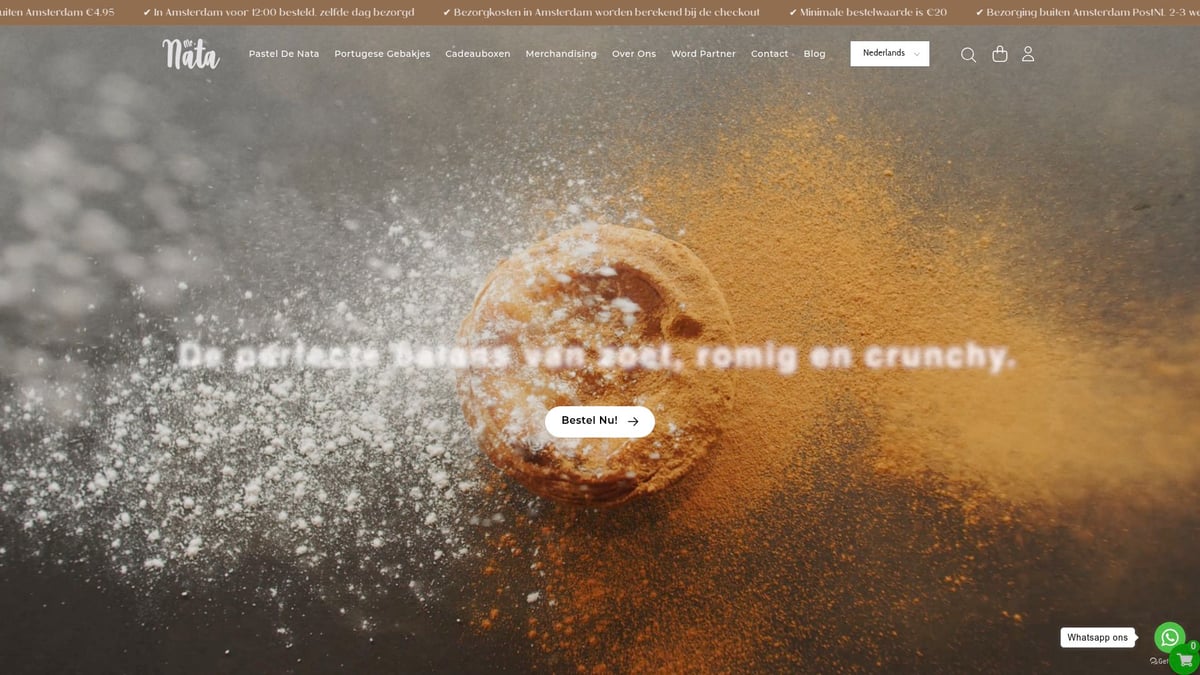
Mister Nata delivers pastel de nata to your door, offers stylish gift wrapping, and collaborates with local restaurants and bars. With three locations in Amsterdam, there's always a place to enjoy the ultimate pastel de nata experience. Whether you're looking for a classic or a new flavor, Mister Nata proves that pastel de nata is completely contemporary.
How to Recognize the Perfect Pastel de Nata
Recognizing a perfect pastel de nata? It's a feast for the senses. Whether you're in Portugal or at your favorite bakery around the corner, there are a few clear characteristics you can always look for. Below, you'll find exactly what to look for to distinguish a genuine pastel de nata from the rest.
Appearance and structure
Appearance matters too. A good pastel de nata has a golden brown, crispy puff pastry base. You often see lovely dark spots on the custard, a sign that it's baked properly. The filling should be velvety smooth, not too firm, and certainly not too runny.
Also pay attention to the top: it should be lightly caramelized, slightly shiny, and even slightly bubbly. The base should never be soggy, as that delicious crunch will be lost. If you see a pastel de nata with these characteristics, there's a good chance you've got a winner.
Flavor profile
Of course, it's all about the taste. A true pastel de nata has the perfect balance of sweetness, creaminess, and a fresh citrus note. The custard filling is soft and melts in your mouth, but not overly sweet.
What makes this delicacy truly unique is the subtle hint of cinnamon you often taste. You immediately notice the difference when fresh ingredients are used. Every bite of a good pastel de nata transports you to a sunny Lisbon terrace.
What to look for when purchasing
Want to be sure you're buying a fresh pastel de nata? Here are some things to keep in mind:
- Freshness: always choose ones that were baked the same day.
- Smell: Do you smell warm custard and buttery dough? Then you're in the right place.
- Price: in Portugal you usually pay between €1 and €2 per piece, in the Netherlands often €2 to €3.
It's best to taste your pastel de nata while it's still warm, as that's when the flavor really comes into its own. Not sure? Feel free to ask the baker when they're made.
Comparison with other pastries
You see them everywhere, but what makes pastel de nata so different from other custard tarts? Unlike the Hong Kong egg tart, pastel de nata has a crispier crust and a deeper caramel flavor.
French tartlets are often sweeter and less creamy on the inside. The uniqueness of pastel de nata lies in its balance: crispy, creamy, light, and with that typical Portuguese twist. No other pastry captures this combination so well.
Step-by-Step: The Ultimate Pastel de Nata Recipe
Want to recreate the magic of pastel de nata at home? With this step-by-step recipe, you'll enjoy crispy puff pastry and creamy custard, just like in Lisbon. Whether you're a beginner baker or a seasoned home chef, this guide will help you on your way to the perfect tart. For even more tips and a detailed recipe, you can also consult Mister Nata's step-by-step Pastel de Nata recipe .
Supplies and ingredients
To make authentic pastel de nata, you'll need a few basic supplies. Below is a handy overview:
| Ingredient | Quantity | Optional |
|---|---|---|
| Puff pastry | 1 roll (homemade or ready-made) | Vegan/gluten-free |
| Egg yolks | 6 pieces | Vegan alternative |
| Whole milk | 500 ml | Plant-based milk |
| Sugar | 250 grams | |
| Lemon peel | From 1 lemon | Lime/vanilla |
| Vanilla pod | 1 | Essence |
| Cinnamon stick | 1 | |
| Cornstarch | 30 grams | |
| Salty | Pinch |
For baking, use a muffin tin or special nata molds. This will lay the foundation for your pastel de nata adventure.
Step 1: Making the perfect puff pastry
For the ultimate pastel de nata, puff pastry is essential. Homemade dough gives it that iconic crispness. Start with flour, cold butter, a little lemon juice, and ice-cold water. Work quickly so the butter doesn't melt. Fold and roll out the dough several times for extra layers.
Let the dough rest in the refrigerator for at least 30 minutes. You can also use ready-made puff pastry if you need to make it quickly. Want to really go all out? Then follow the traditional folding technique, rolling out and folding the dough several times. This creates that beautiful, crispy edge so typical of pastel de nata.
Step 2: Prepare the custard filling
The filling is the heart of every pastel de nata. Warm the milk with a cinnamon stick and the vanilla pod. In a separate bowl, combine the egg yolks, sugar, cornstarch, and lemon zest. Pour a little of the warm milk into the egg mixture to temper it, then combine everything.
Bring the mixture slowly to a boil until it thickens, but don't let it bubble. Strain the custard for a super smooth texture. Let it cool slightly before using the filling. This is how you get that velvety, creamy custard that makes pastel de nata so irresistible.
Step 3: Assemble and bake
Roll out the puff pastry into a long roll and cut into slices. Press each slice into the ramekins to create a thin, even base. Fill the ramekins about two-thirds full with the custard filling.
Preheat the oven to 225°C (435°F). Bake the pastel de nata for about 10 minutes at this temperature, then reduce the oven temperature to 200°C (400°F) and bake for another 15 minutes, or until the top is golden brown and lightly caramelized. The characteristic dark spots are a good sign. Remove from the oven and let cool briefly.
Step 4: Serve and enjoy
Serve your pastel de nata warm. Sprinkle generously with cinnamon for that Portuguese touch. They're best enjoyed the same day, with a strong espresso or a glass of port.
Want to impress your guests? Serve them on a beautiful platter, perhaps with some fresh fruit or a scoop of ice cream. This way, pastel de nata truly becomes a party.
Common mistakes & solutions
Baking pastel de nata yourself can take some practice. Here are the most common pitfalls and how to avoid them:
- Too wet base: Let the dough rest well and bake at a high temperature.
- Custard too firm or too runny: Follow the recipe carefully and pay attention to the temperature.
- Burning: Keep a close eye on the oven, every stove is different.
- Custard sinks: Let the pastries cool slightly in the oven with the door ajar.
With these tips, you're ready to make your perfect pastel de nata. Happy baking!
Where Can You Taste the Best Pastel de Nata in 2025?
Looking for the ultimate pastel de nata experience in 2025? Whether you're in Portugal, the Netherlands, or far beyond, this delicacy is never far away. Where can you find the truly best?
Portugal: iconic addresses
Start your pastel de nata journey in Portugal, the country where this delicacy originated. Lisbon is the place to go for Pastéis de Belém . Thousands are sold daily, often resulting in long lines.
Another top pick is Manteigaria , with locations in both Lisbon and Porto. Local pastelarias across the country often offer surprisingly good pastel de nata, each with its own secret.
According to Tripadvisor 2024, Pastéis de Belém, Manteigaria, and Fabrica da Nata are the top three pastelarias for pastel de nata. Don't forget to try them outside the big cities as well, because that's where you'll sometimes find the biggest surprises.
The Netherlands & Belgium: hotspots
Pastel de nata has also become incredibly popular in the Netherlands and Belgium. Specialty bakeries are popping up everywhere, especially in Amsterdam. Mister Nata is a leading name here, with no fewer than three locations in the capital.
Their selection ranges from classic to vegan and even limited editions. They have an impressively high rating: 4.8 out of 5 stars based on over 724 reviews. Want to know more about where to find the best pastel de nata in the Netherlands? Then be sure to read this comprehensive overview of Pastel de Nata in the Netherlands .
In Rotterdam and Antwerp you'll also find more and more pastel de nata hotspots, often with their own twist on the classic recipe.
International top businesses
Pastel de nata has conquered the world. In cities like London, Paris, and New York, you can now find bakeries dedicated entirely to this Portuguese delicacy.
In London, Lisbon Pastry is a household name, while in Paris , Comme à Lisbonne is known for its authentic flavor. New York boasts several trendy coffee shops specializing in pastel de nata and other Portuguese pastries.
Pastel de nata has become a global food trend. More and more people are discovering the unique combination of crispy dough and creamy custard, ensuring its enduring popularity.
What to look for when choosing an address
So how do you choose the best place for pastel de nata? Pay attention to freshness. The best ones are baked the same day and have a warm, buttery aroma.
Flavor originality is becoming increasingly important. Some bakeries offer creative variations, from chocolate to matcha. Ambience and service are also important to the overall experience.
Always check reviews and social proof online. This way, you can be sure you're visiting a place where pastel de nata is made with love and craftsmanship. Every bite becomes a little celebration.
Pastel de Nata Home: Tips for Baking Enthusiasts
Want to recreate the magic of pastel de nata at home? With a little creativity and helpful tips, you can make this Portuguese classic in your own kitchen. Whether you enjoy experimenting or prefer to stick with the traditional recipe, there are plenty of ways to make your pastel de nata unique.
Variations for advanced bakers
For those who dare to experiment with pastel de nata, there are countless variations. Think vegan pastel de nata with plant-based milk and egg-free custard, or gluten-free options with special puff pastry. Fancy something new? Try flavors like matcha, caramel, or red fruit. This way, you can give your pastry a surprising twist. Want a classic recipe as a base? Then be sure to check out this Pastel de Nata recipe for a step-by-step explanation.
Presentation and storage
The presentation of your pastel de nata is just as important as its taste. Serve them on a beautiful plate with a sprinkle of cinnamon and powdered sugar for that authentic Portuguese feel. For food photography, play with light and composition to make your creations shine on social media. Store your pastries in an airtight container and refrigerate; they'll stay perfectly flavorful for about two days.
Pastel de Nata as a gift or for parties
Pastel de nata isn't just delicious with coffee, it also makes a unique gift or festive treat. Think of attractive gift wrapping, perhaps along with a bottle of Portuguese wine or fresh coffee beans. This way, you can turn any occasion into a little celebration and surprise your friends or family with a tasteful gesture.
Workshops & community
Want to improve your pastel de nata skills? In the Netherlands, there are a growing number of baking workshops and online courses where you can collaborate with others. Share your most beautiful creations on social media with #pasteldenata2025 and become part of a growing community of home bakers. This way, you'll inspire others and gain new ideas of your own.
Frequently asked questions from home bakers
Do you have questions while baking pastel de nata? You're not alone! Why does my custard sometimes collapse after baking? How do I prevent the dough from becoming soggy? And what are the best tips for a crispy crust? With a little practice and the right tips, every batch will be better. Keep trying and, most importantly, enjoy the process.
Pastel de Nata: More Than Just Pastry
Cultural significance in Portugal
If you've ever been to Portugal, you know that pastel de nata is more than just a pastry. This small cake is a symbol of Portuguese hospitality and tradition. You'll find pastel de nata on every street corner, from locals enjoying it for breakfast to families sharing it with afternoon coffee.
During holidays and special occasions, pastel de nata is always on the table. It's not just a delicacy, but also a way to connect and create memories. The significance of pastel de nata extends beyond its flavor. Want to learn more about its cultural significance? Then read The Role of Pastel de Nata in Portuguese Culture .
Pastel de Nata as a source of inspiration
Did you know that pastel de nata inspires even beyond the bakery? You see it reflected in art, design, and even souvenirs. Think ceramic natas, T-shirts, and paintings featuring pastel de nata. In Portugal, there are food festivals where pastel de nata takes center stage, and the best bakers compete against each other in baking competitions.
This pastry is not only a flavor bomb, but also a cultural icon that sparks creativity. Pastel de nata is the perfect example of how food brings people together and inspires new ideas.
Health and nutritional value
Pastel de nata isn't necessarily a light snack, as one pastry typically contains around 200 calories. Yet, you can still enjoy it consciously. More and more bakeries are offering smaller portions or healthier alternatives, so you can enjoy them guilt-free.
Demand for vegan and lactose-free pastel de nata is rising. You can choose plant-based milk or egg-free custard and still experience that signature flavor. Pastel de nata is therefore a perfect fit for a modern, varied lifestyle.
Future Perspective: The Taste of 2025 and Beyond
The future of pastel de nata looks promising. Expect even more variety, sustainability, and internationalization. In 2024, the number of pastel de nata bakeries worldwide grew by 15 percent, and that trend is continuing.
New flavors, innovative fillings, and sustainable production are key. Pastel de nata isn't just a food fad; it's developing into a lasting phenomenon on the international food scene. Who knows what flavors you'll encounter in 2025?
Pastel de Nata in the catering and retail industry
Wherever you look, pastel de nata pops up everywhere. From trendy coffee shops to Michelin-starred restaurants, the pastry is popular as a dessert and snack. You'll also find pastel de nata more and more often in supermarkets and online shops, so you can enjoy it at home.
In the Netherlands and Belgium, sales of pastel de nata have increased significantly since 2022. More and more people are discovering the versatility of this treat, whether you want a quick snack or a luxurious dessert.
The role of social media and influencers
Social media plays a huge role in pastel de nata's popularity. Instagram and TikTok are brimming with recipes, food photos, and challenges. Well-known food bloggers share their favorite spots, and the hashtag #pasteldenata is used thousands of times.
User-generated content ensures that pastel de nata is shared and discussed worldwide. This makes the pastry not only a Portuguese classic but also an international hit that everyone wants to make and taste for themselves.
Now that you know all about the rich history, surprising flavors, and the art of making that crisp, creamy Pastel de Nata, the real enjoyment begins. Why wait until you're in Portugal when you can bring the authentic experience right home? Whether you want to savor a delicious treat, share with friends, or surprise someone with a gift box, at Mister Nata in Amsterdam you can bring the taste of Portugal right into your home. Fancy a freshly baked pastel for yourself? Order now and taste the difference for yourself!