

Are you ready to discover the sweetest side of Portugal? Portuguese cakes are a true sensation, capturing hearts worldwide with their rich flavors, unique textures, and age-old traditions.
In this article, we'll take you on a delicious journey through the 8 Portuguese cakes you absolutely must try in 2025. From well-known classics to hidden regional gems, each pastry has its own story and character.
Let yourself be tempted by unique flavors, learn where to find these cakes, and even discover how to have them delivered to your home. This way, you'll not only sample the most famous Portuguese cakes, but also discover local gems with handy addresses and practical tips.
8 Portugal Cakes You Must Try in 2025
Fancy a sweet journey through Portugal? Here's the ultimate list of 8 Portuguese cakes you absolutely can't miss in 2025. Each one is unique, with its own story, texture, and explosion of flavor. Whether you're a seasoned foodie or simply love delicious pastries, this selection brings the best of Portugal to your plate.
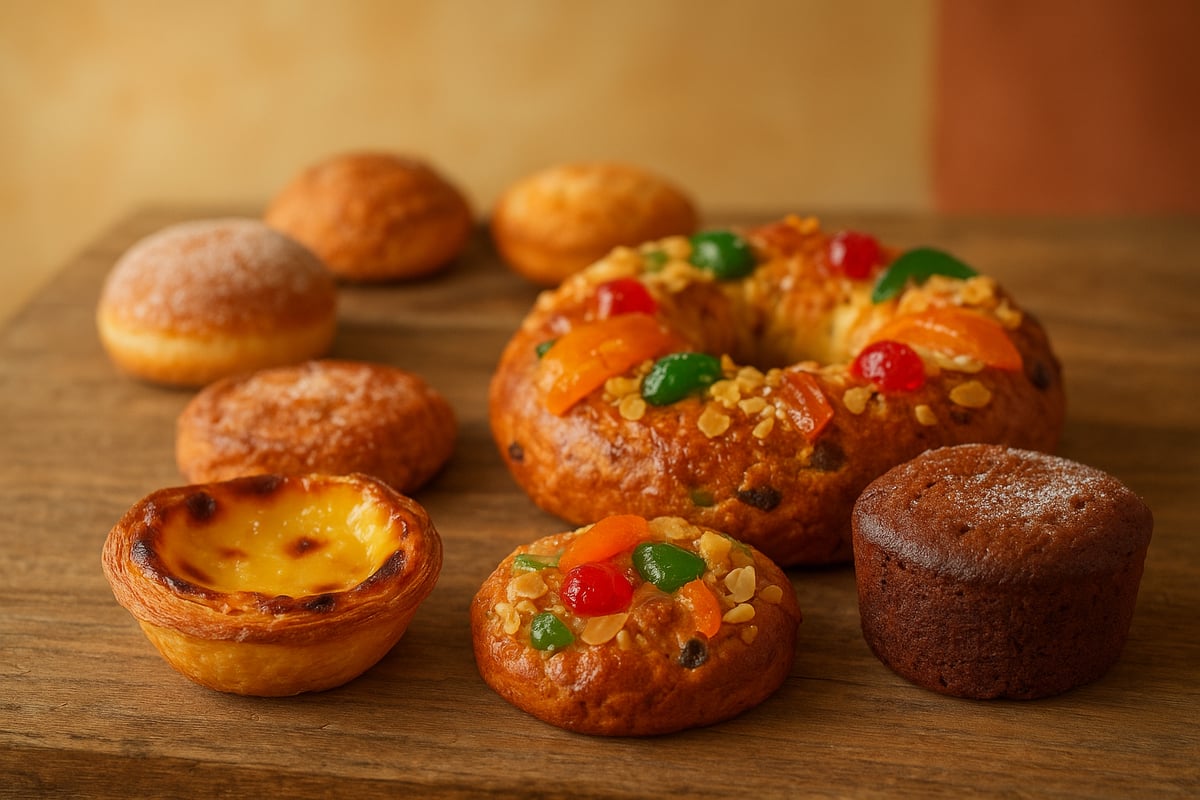
1. Pastel de Nata
When you think of Portuguese cakes, the Pastel de Nata is probably the first thing that comes to mind. These iconic custard tarts have been a favorite in Portugal since the 18th century. Originally made by monks at the Jerónimos Monastery in Belém, they were a favorite. The combination of a crispy pastry base and a creamy custard filling is irresistible.
What makes this cake so special? The texture! Crispy on the outside, silky soft on the inside. Millions are sold worldwide, and you can even find them in trendy coffee shops in Amsterdam. But honestly, nowhere do they taste better than in Portugal itself. In Lisbon, you can choose between the famous Pastéis de Belém (with a secret recipe) and the slightly different, but equally delicious, Pastéis de Nata from local pastelarias.
Did you know this cake is best enjoyed with a sprinkle of cinnamon and powdered sugar? And that these days there are also vegan, chocolate, and even fruit versions? Curious about all the facts and the story behind this treat? Then read What is a Pastel de Nata? for a comprehensive guide. In the Netherlands, you can try the authentic version at Mister Nata in Amsterdam. In short, a must-have on your Portugal cakes bucket list!
2. Pão de Ló de Ovar
The light, moist Pão de Ló de Ovar is a classic among Portuguese cakes. This cake originates from the town of Ovar and was mentioned in old Portuguese writings as early as 1781. The secret? A generous amount of eggs creates a velvety-soft, almost moist interior and a thin, golden-brown crust.
This cake is a must-have for Portuguese celebrations, especially at Easter. Each region has its own version, such as the Pão de Ló de Alfeizerão, which is even more liquid. It's one of the most popular cakes at food festivals in Portugal—you'll always see it there.
Want to try the real thing? Then you should visit a bakery in Ovar. Prefer to enjoy it at home? Some Portuguese bakeries now offer it for online ordering. Definitely put this one on your list of Portuguese cakes to try!
3. Bolo de Mel (Madeira)
Bolo de Mel is Madeira's oldest dessert and an absolute gem among Portuguese cakes. This spicy pastry has been baked since the 15th century! The ingredients are a treat in themselves: honey, molasses, almonds, walnuts, cinnamon, and a mix of other spices.
Traditionally, the Bolo de Mel is not cut, but torn by hand. Thanks to the molasses, this cake will keep for up to five years—perfect for enjoying it without rushing. While it's most commonly eaten at Christmas, you can find it year-round at Fábrica do Ribeiro Sêco and Fábrica Santo António in Funchal.
Bolo de Mel is a must-try on Madeira during the holidays. Its rich flavor and long shelf life make it unique among all the Portuguese cakes. Definitely try it if you're on the island!
4. Guardanapos
Guardanapos, or "napkins," are airy sponge cakes folded in half like a napkin. The filling? Usually a creamy vanilla or lemon custard. This cake is incredibly popular in pastelarias throughout Portugal and is a must-have with your daily coffee.
There are all sorts of variations, for example, with chocolate or strawberry cream. Guardanapos are often dusted with powdered sugar, which gives them that extra something special. According to TasteAtlas, they are among the top 10 Portuguese cakes.
You'll find Guardanapos mainly in traditional bakeries in Lisbon and Porto. They're delicious as a snack, but also perfect for dessert. Definitely put this on your to-eat list if you're a fan of soft, creamy Portuguese cakes!
5. Queijada da Dona Amélia
Looking for something special from the Azores? The Queijada da Dona Amélia is a real treat among the Portuguese cakes. Originally called "Indianos," it became popular after Queen Amélia's visit to Angra do Heroísmo in 1901.
The ingredients make it special: honey, cinnamon, cornmeal, raisins, syrup, and powdered sugar create a spicy, almost gingerbread-like flavor. The Queijada da Dona Amélia is the pride of Terceira, a UNESCO World Heritage city.
At the pastelaria 'O Forno' in Angra, you can sample this cake alongside locals and tourists. Don't miss this unique treat on your list of Portuguese cakes!
6. Bolo de Chila
From the Algarve comes Bolo de Chila, a unique example of Portuguese cakes. The main ingredient is chila, also known as fig-leaf squash. Combined with eggs, cocoa, ground almonds, and sometimes orange or cinnamon, it creates a light, moist cake with a unique character.
Bolo de Chila is often decorated with powdered sugar or "fios de ovos" (sweet egg threads). In the Algarve, this cake is a regular at holidays and family gatherings. Its unique squash and surprising flavor are making it increasingly popular with foodies looking for original Portuguese cakes.
You'll find it mainly in local bakeries in the Algarve. Highly recommended for anyone who wants to try something new!
7. Bolo Rei
Bolo Rei is the king of Portuguese cakes around Christmas and Epiphany. This round cake with a hole in the center is lavishly decorated with candied fruit and nuts. Its origins lie in French traditions, but since the 19th century, Bolo Rei has been a staple in Portuguese homes.
A fun tradition: a bean and a small surprise are hidden inside the cake. Whoever finds the bean has to buy the cake next year! There's also a version, the Bolo Rainha, with more nuts and less fruit.
Thousands are sold in December, especially at Confeitaria Nacional in Lisbon. Want to try them at home? Then be sure to check where you can buy and taste Bolo Rei in the Netherlands. Add this classic to your Portuguese cakes wishlist!
8. Morgado de Figo
Morgado de Figo is a gem from the Algarve and a healthy addition to the world of Portuguese cakes. This dense, sweet cake is made with figs, almonds, sugar, cinnamon, and lemon zest. It's flourless and eggless, making it perfect for vegetarians and often vegan.
The texture is a bit like an energy bar, but much tastier! In the Algarve, Morgado de Figo is often served with coffee or as a dessert. You'll find it mainly at local markets and small patisseries.
More and more people are choosing this cake as a healthy alternative to other sweets. Curious about more traditional and surprising Portuguese cakes? Then check out the Portuguese pastry collection for inspiration and ordering options.
The Unique Taste Experience of Portuguese Cakes
Portuguese cakes are more than just sweet treats; they tell the story of a country rich in traditions, secret recipes, and regional treasures. What makes Portuguese cakes so special? Let's delve into the rich culture, local ingredients, and modern innovations behind these iconic treats.
The Influence of Monasteries and Religion
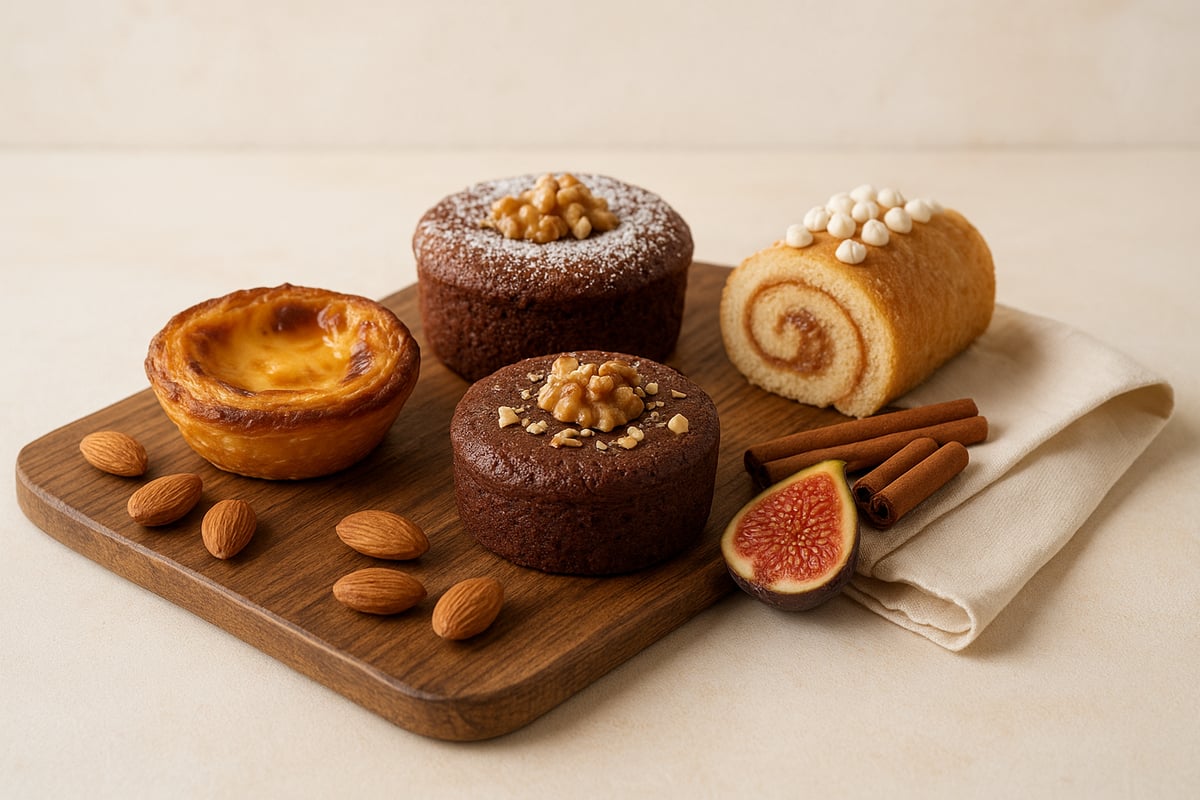
Many of the most famous Portuguese cakes originate from monasteries and convents, where nuns became master bakers centuries ago. They used eggs, almonds, and sugar, resulting in rich, soft cakes like Pão de Ló and Toucinho do Céu. The abundance of eggs in convents gave rise to countless variations of light, custard-like cakes. This religious origin is reflected in the care with which recipes are preserved, often as closely guarded family secrets. Protecting these traditions makes Portuguese cakes a culinary heritage that all of Portugal is proud of.
Regional Differences and Local Ingredients
Each region in Portugal has put its own unique spin on Portuguese cakes, thanks to the diversity of local products. In the Algarve, for example, you'll find cakes with figs and almonds, while in Madeira, honey and spices take center stage. The Azores excel in spicy cakes with cornmeal and raisins. The mild climate and fertile soil create unique flavors found nowhere else. At local markets and festivals, you can sample the best of this regional creativity, where Portuguese cakes always surprise with their original combinations.
Modern Trends: Vegan and Innovative Flavors
In recent years, Portuguese cakes have become a trend. More and more bakeries are experimenting with vegan versions so everyone can enjoy these delicacies. Think vegan Pastéis de Nata, cakes with fruit or nut fillings, and even fusions with international flavors. Younger generations and foodies are looking for creativity and sustainability, making innovative recipes incredibly popular. Want to know which flavors will be hot in 2025? Then be sure to check out the vegan pastry trends of 2025 for inspiration.
Where to Taste the Best Portuguese Cakes?
If you're looking for authentic Portuguese cakes, pastelarias in Lisbon, Porto, Madeira, the Algarve, and the Azores are a must. Look for labels like "Protected Geographical Indication" for a true taste experience. In the Netherlands, you'll find specialty bakeries offering original Portuguese cakes, often even as gift sets. Want to explore vegan options? Check out this handy overview of vegan bakeries in Portugal for the tastiest spots. This way, you can taste the best of Portugal, wherever you are.
Now that you're fully aware of the most delicious Portuguese cakes you absolutely must try in 2025, you're probably itching to experience them for yourself, right? Why wait for a trip to Portugal when you can experience authentic Pastéis de Nata right here in the Netherlands—fresh from the oven and steeped in tradition? Whether you're curious about the classic version or craving a surprising new flavor, at Mister Nata in Amsterdam, we bring Portugal to you. Curious? Order now and taste it for yourself!